

Tom O’Connell kneels before a nice catch of yellow perch from Piney Reservoir. Photo by Austin Meyermann
Marylanders made it through the cold temperatures of January and February, and perhaps the only reminder left is some patches of snow and ice, and our heating bills. Maryland’s ice-fishing anglers rejoiced in the cold winter and enjoyed good fishing in many of the western region’s reservoirs
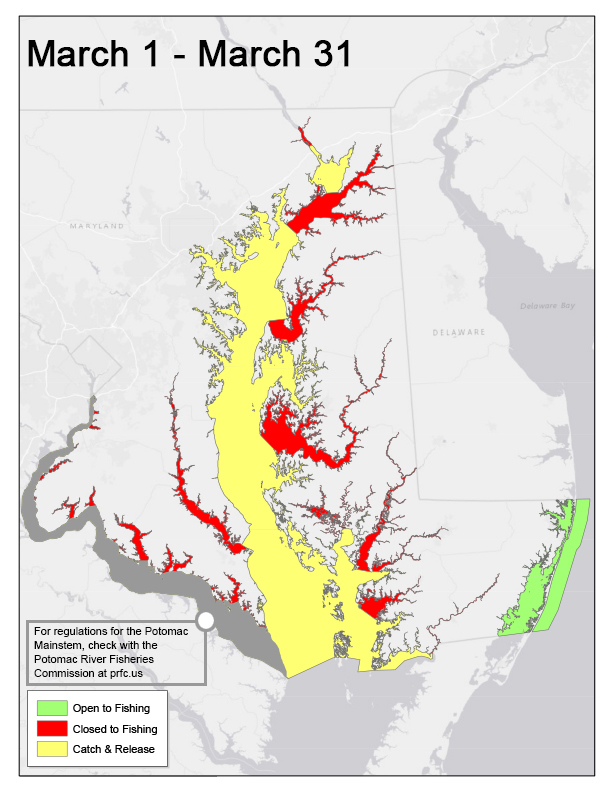
Anglers should note that most tidal rivers in Maryland’s portion are closed to catch-and-release fishing for striped bass. Striped bass will be pushing into the spawning rivers this month and need to be protected from the stress of catch-and-release in the low salinity waters of the tidal rivers. The Maryland DNR website can help guide anglers to areas closed or open to catch-and-release fishing for striped bass.

Boats anchor up in the lower Susquehanna to fish for blue catfish and yellow perch recently. Photo by Keith Lockwood
The lower Susquehanna River was running stained this past weekend and water temperatures were holding at 40 degrees. The large coves off the mouth of the North East River and Charlestown still have large sections of ice that is rapidly deteriorating. Anglers could be seen anchoring out in the lower Susquehanna fishing for blue catfish and yellow perch. Both species are holding in the deeper parts of the channels. Cut bait or scented baits will catch blue catfish. Because the yellow perch are holding deep, a two-hook dropper rig baited with small minnows tends to be the best option for yellow perch.
In the upper Bay tidal rivers, yellow perch can be found in some of the deeper waters in the upper stretches of the rivers. Casting Beetle-spin type lures, shad darts, or small soft plastics can work well in these transition waters below the spawning areas. Chain pickerel can also be found in these same areas holding near sunken wood and a variety of spinners, paddletails, and spoons can encourage them to strike. The Bush, Sassafras, Chester, and Magothy rivers are good places to explore for pre-spawn yellow perch.
The Choptank River holds promise for anglers this week. Water temperatures are still quite cold. The Cambridge area’s recent water temperature was 38.5 degrees; Denton and Hillsboro waters are 41 degrees. Anglers will find yellow perch staging in some of the deeper waters, miles below the spawning areas. Blue catfish will be found in the channels from Cambridge to above Denton. The cold-water conditions do not present the most ideal conditions for blue catfish, but they will respond to bait. Yellow perch will be deep, and lip-hooked minnows or small soft plastic jigs worked slowly and close to the bottom will be a good option.
Many of the upper sections of the western shore tidal rivers offer good fishing for chain pickerel. Targeting sunken wood along shoreline with paddletails or spinners is a good way to get in on the fun action. Single inline hooks will help save chain pickerel from excessive damage to the gills if fish are to be released.
Lower Bay

Jonathan Decker caught and released this striped bass recently. Photo courtesy of Jonathan Decker
Anglers in the lower Bay have a few options this week for catch-and-release striped bass fishing. The warm water discharge at the Calvert Cliffs Nuclear Power Plant is always a draw for anglers and striped bass during the cold month of March. Drifting through the discharge current and jigging with large soft plastics can offer some fun catch and release action. Water temperatures in the bay are cold, and school sized striped bass will be slow to show any interest in jigs. Maryland’s tidal rivers are now closed to catch and release fishing, but the tidal Potomac River is open to catch and release.
It is still early for the anticipated spring runs of yellow perch, white perch, and hickory shad, but a few weeks can change things. Yellow perch are staging in transition areas below the spawning areas and can be found holding deep. Dropper rigs using minnows or small plastic jigs is a good way to target them.
Fishing for blue catfish is a worthwhile endeavor this week. The Nanticoke River in the Marshyhope/ Sharptown area holds a lot of blue catfish, which will be holding in the deeper channel waters. The tidal Potomac is full of blue catfish, and the largest ones are often found in the deep channel waters of Fort Washington.
Anglers will see yellow perch staging in many of the region’s tidal rivers on the eastern and western sides of the bay this week. The Wicomico, Pocomoke and Marshyhope are a few on the Eastern Shore. The Patuxent, Wicomico rivers and Mattawoman Creek are a few on the western side of the bay.

Saugeye, photo by Tom O’Connell
The put-and-take trout management waters have been a big draw for anglers for the past month. The trout stocking program has undergone some exciting changes following angler survey results. Trout management waters in the eastern, southern, and central regions are a priority for stocking during February and March when water temperatures are ideal for trout. The western counties of Allegany and Garrett counties will receive trout stockings from March to May since those waters stay cooler through those months.
Also new this year, a monthly schedule is available on the trout stocking website. Anglers should note that some of the trout stocking efforts were hampered by ice conditions. Perhaps the most exciting news for trout anglers is that the trout program expects to stock 26% more trout in 2026 than in 2025, due to increased production. The Albert Powell trout hatchery will undergo major improvements that will facilitate increased trout production for the trout stocking program.
Mark your calendars for the annual Youth-Only Trout Fishing Day on March 21 from 6:30 a.m. until 10 p.m. The Closure 1 management waters will be open to our young anglers under the age of 16 and will offer them the best opportunities to enjoy trout fishing. The daily creel limit for our young anglers will be two trout per child (no brook trout allowed). The big day that every trout angler waits for will be the traditional opening day for all closure 1 and 2 trout waters on Saturday March 28.
Many anglers that enjoy ice fishing were able to enjoy their sport during the month of February on many of the reservoirs in the western region. Anglers enjoyed catching a wide variety of fish species. Yellow perch and bluegill sunfish are often popular species. In Piney Reservoir biologists introduced a hybrid fish called a saugeye, which is a cross between a walleye and sauger to better manage the yellow perch population there. Saugeye are much more tolerable to warmer waters. It has been a big success, and anglers can look forward to catching this exciting and flavorful fish.
Now that the ice has retreated in most areas anglers can look forward to fishing for chain pickerel and crappie in the upper reaches of the tidal rivers and impoundments across Maryland. Casting a variety of lures near sunken structure for chain pickerel is a cold-water favorite. Crappie can be found holding near sunken brush, fallen treetops and marina docks.
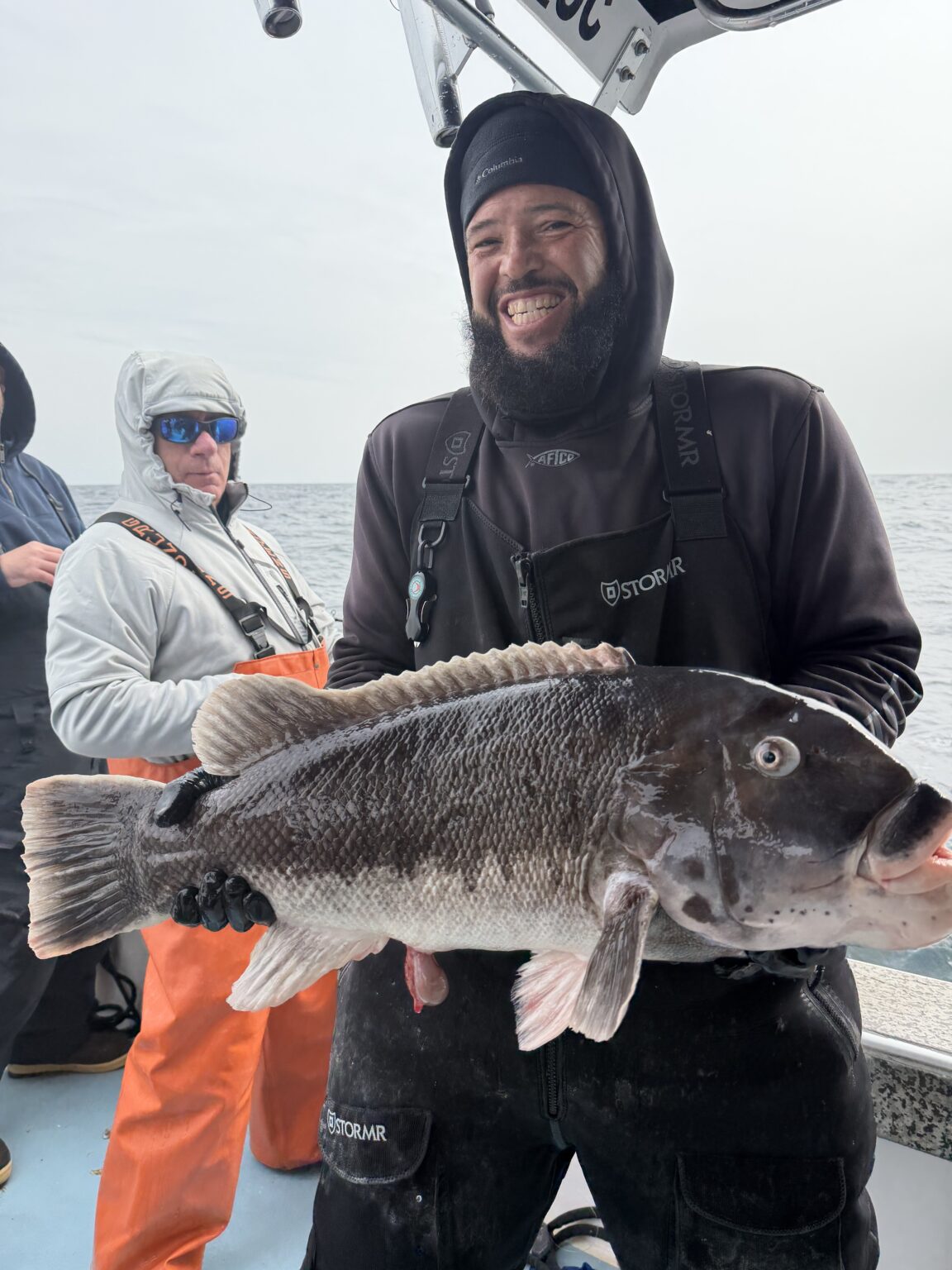
Tautog, photo courtesy of Scott Lenox
Atlantic Ocean and Coastal Bays
Boats out of Ocean City have been ferrying anglers to the offshore wreck and reef sites for some excellent fishing for tautog. The 2026 tautog season runs through May 15 allowing four fish per angler per day; the season closes May 16 until July, and then opens again through October 31 with a two fish per day per angler limit. From November 1 through December 31, the daily limit goes back to 4 fish per day per angler.
The black sea bass season in Maryland is closed until May 15, but boat captains made the long run to Virginia’s offshore waters to allow anglers to fish during Virginia’s February bonus black sea bass season. Anglers returned to Ocean City docks with some impressive catches of deep-water black sea bass.
“….No man is born an artist nor an angler.” – Izaak Walton, 1653
Maryland Fishing Report is written and compiled by Keith Lockwood, fisheries biologist with the Maryland Department of Natural Resources.
The Forecast Summary is written by Tidewater Ecosystem Assessment Director Tom Parham.
A reminder to all Maryland anglers, please participate in DNR’s Volunteer Angler Surveys. This allows citizen scientists to contribute valuable data to the monitoring and management of several important fish species.